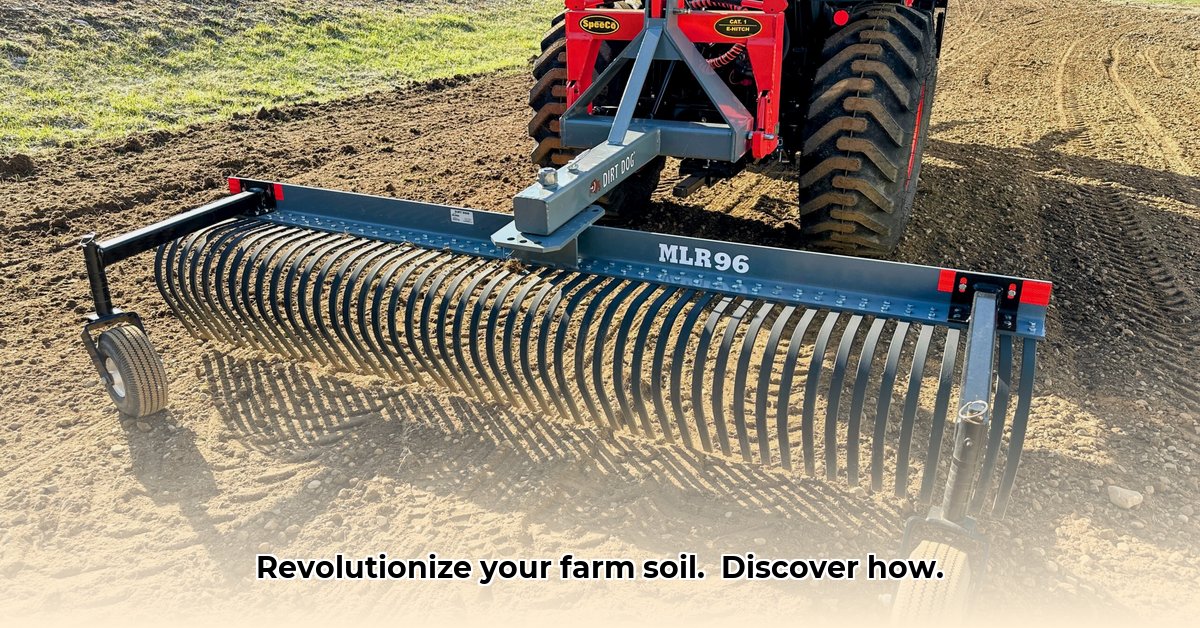
Rake tractors are invaluable tools for sustainable agriculture, offering significant benefits in soil health, efficiency, and environmental stewardship. This guide provides a comprehensive overview of selecting, using, and maintaining a rake tractor to optimize your farming practices while minimizing your environmental footprint. For more information on three-point hitches, vital for rake attachment, see this helpful resource.
Choosing the Right Rake Tractor: A Perfect Fit for Your Farm
Selecting the appropriate rake tractor is crucial for success. Consider these key factors:
Horsepower Harmony: Ensure your tractor possesses sufficient horsepower (the power output of the engine) to comfortably operate the rake without strain. Refer to your tractor's manual for safe horsepower limits. A three-point hitch (a mechanism connecting the implement to the tractor) is essential for secure attachment.
Sizing Up Your Rake: The rake's width should align with your field size. Wider rakes cover more ground quickly, but maneuverability might be limited in smaller spaces. The tines (the teeth that perform the raking) are equally vital. Widely spaced tines suit lighter materials like hay, while closer-set tines excel with heavier debris. Selecting the right rake is akin to choosing the right tool for a specific task.
Gauge Wheel Genius: Gauge wheels (wheels that control the depth of the rake) regulate the working depth for consistent performance and minimize soil disturbance. Adjustable gauge wheels offer greater adaptability for varied ground conditions. They're essential for even work.
Mastering the Rake Tractor: A Step-by-Step Operational Guide
Effective rake tractor operation maximizes results while minimizing environmental impact. Follow these steps:
Hitching Up: Securely attach the rake to your tractor's three-point hitch, ensuring all pins are firmly in place. Safety is paramount.
Wheel Adjustment: Set the gauge wheels to the appropriate depth, based on the material being raked and soil conditions. Begin conservatively and make adjustments as necessary.
Gentle Start: Initiate raking at a slow pace, gradually increasing speed as you gain experience. This allows you to gauge the rake's handling and adjust pressure accordingly.
Overlap for Thoroughness: Slightly overlap each pass to ensure complete coverage. Thoroughness prevents missed areas.
Soil Savvy: Observe the soil closely. If stress signs appear, reduce speed or adjust the rake's depth. Healthy soil is vital for successful farming.
Regular TLC: Clean the rake thoroughly after each use, removing mud, sticks, or debris. Lubricate moving parts to maintain smooth operation. This extends the lifespan of your equipment.
Sustainable Raking: Environmentally Conscious Practices
Sustainable farming requires responsible practices. Here’s how to integrate sustainability into your rake tractor operation:
Gentle on the Ground: Avoid excessive weight on the rake and work at a slow, deliberate pace. Minimize soil compaction, which is crucial for healthy plant growth.
Smart Material Choices: Consider rakes manufactured from sustainable or recycled materials, reducing resource consumption and waste.
Responsible Retirement: Properly dispose of your rake when it reaches the end of its lifespan. Explore options for recycling metal parts to reduce landfill contributions.
Long-Term Vision: Integrating Sustainable Practices into Your Farm's Future
Sustainable farming is an ongoing commitment. Consider these long-term strategies:
Soil Health Monitoring: Track soil health indicators such as organic matter content and erosion rates to assess the impact of your practices. Data-driven decisions are crucial for optimization.
Precision Farming Techniques: Incorporate precision agricultural technologies, such as GPS guidance, to enhance efficiency and target specific areas requiring attention.
Continuous Learning: Stay informed about advancements in sustainable farm equipment and techniques for optimal practices and resource management.
Actionable Steps for Sustainable Rake Tractor Use
This table outlines short-term and long-term goals for sustainable rake tractor use:
| Step | Short-Term Goal (0-1 year) | Long-Term Goal (3-5 years) |
|---|---|---|
| Rake Selection | Choose a rake suitable for your farm and soil type. | Regularly assess and upgrade equipment to minimize environmental impact. |
| Operation Optimization | Master efficient raking techniques to minimize soil compaction. | Implement precision agriculture techniques like GPS guidance in raking operations. |
| Maintenance Program | Establish a regular maintenance schedule to ensure optimal rake condition. | Explore options for repairing and reusing parts instead of replacing them. |
| Knowledge Expansion | Increase understanding of sustainable agricultural practices. | Stay informed on the latest advancements in sustainable farm equipment and techniques. |
By carefully employing your rake tractor and implementing these sustainable strategies, you'll enhance your farm's productivity while contributing to a healthier planet. Remember, responsible resource management is key to long-term sustainability.